
August 22 2026, 16:35
Insignificance
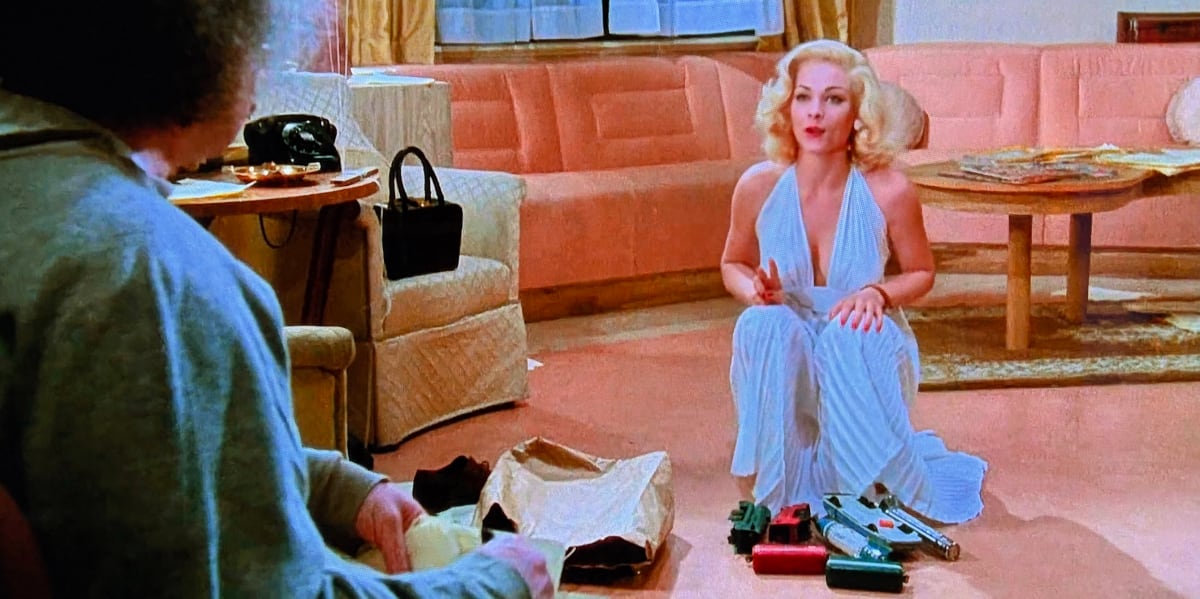
Four iconic figures meet in a New York hotel room in 1954. They are not named, instead called The Actress, The Professor, The Senator and The Baseball Player, but it’s clear who they are meant to be: Marilyn Monroe, Albert Einstein, Senator Joe McCarthy and Joe DiMaggio.
Einstein is tormented with visions of the dead in Japan after the atomic bombs dropped in 1945. When Monroe knocks on his door in the middle of the night, he doesn’t take much convincing to let her in, even if he doesn’t know who she is. She’s lonely, unhappy in her marriage to DiMaggio, and wants to take the chance to get to know Einstein as a person. One of her strategies is to show her understanding of his theory of relativity with a joyful demonstration using children’s toys she bought en route. Another strategy is the offer of sex. But then DiMaggio shows up.
The relationship between Monroe and DiMaggio is doomed for many reasons. Her desire for children is thwarted by abortions organised by the studios because she’s under contract that have left her permanently damaged. DiMaggio is a man who knows what he wants and gets it – but he can’t give her children, and the attention she gets is making him miserable. In buying her attention he has bitten off more than he can chew.
Senator McCarthy tries to intimidate Einstein into appearing at one of his infamous hearings, and if he doesn’t, threatens to confiscate his life's work. He is power hungry, manipulative and brutal. Einstein’s mathematical proofs lie in chaotic loose piles around the hotel room and Einstein seems to be happiest when lost in theory and abstractions. He wants to describe the universe completely with mathematics. By the end it becomes clear that this is one of the ways that he avoids feeling the guilt of his connection with the creation of the atomic bomb.
The wonder of the film is that it’s played as a black comedy bordering at times on farce, but it still manages to address all the themes alluded to above – the deaths of civilians by atomic bombs, abortion and miscarriage, the allure of fame, the psychology of needing attention, Hollywood misogyny, political power, infidelity, and more. The actors lean in to the mythic qualities of the icons they are playing, but the script puts all of their human insecurities on display. Even the biggest names in Western culture are insignificant in relation to the stars in the sky — looking up at the stars is a motif that comes up multiple times. Fame (and infamy) is relative.
August 21 2026, 16:42
Teenage Sex and Death at Camp Miasma
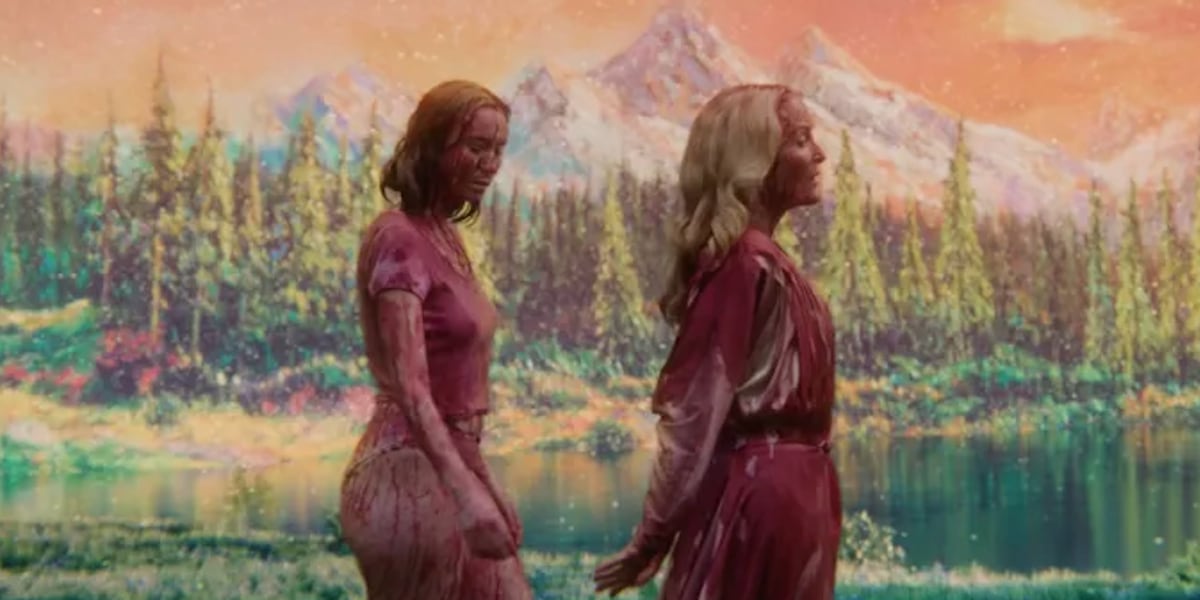
Filmmaker Kris has signed up to reboot a famous eighties horror film franchise set at a summer camp. The studio wants it to be "woke" to attract a young audience, but Kris wants to make something artistic. She sets out to meet the reclusive original final girl, Billy Summers, who lives alone in the woods at the original film location. On meeting Billy, Kris begins to question her own motivations and finds the real purpose of Camp Miasma’s killer, Little Death.
It’s clear from the opening that Kris (Hannah Einbinder) isn’t happy with her studio executives or the direction the film is going. Her polyamorous relationship with Mari (who is also seeing a man called Thor) seems shallow and shaky. Kris is skilled at intellectualising feelings to avoid dealing with them. In their first meeting, Billy (Gillian Anderson) is quick to call this out, and because Kris is desperate to work with Billy, Kris has to start to open up, and she quickly realises Billy needs to be the lead of the film.
The slasher villain, Little Death, is an on-the-nose metaphor for Billy’s secret history with the original film and Kris’s inability to enjoy sex. The growing intimacy between them enables Kris to stand up to the studio executives, and then, as her creative power grows, harness Little Death to fully unblock her creativity. As in a therapeutic relationship, change can be sudden and strong in the presence of someone paying the right sort of attention. Billy has what Kris needs and is willing to give it.
The kills are played for slapstick humour, with the blood mostly cartoonish, and there’s a tremendous, extended slaughter scene to an amusing needle drop just after the halfway point. However, this isn't a horror film, it's a romantic comedy about creativity, and it wouldn't work without the tender chemistry between the two leads. I had a great time watching this!
August 16 2026, 08:47
Adaptation
Screenwriter Charlie Kaufman has writer’s block trying to adapt a bestselling book, The Orchid Thief. He is obsessed with doing the book justice and not letting down the author, New Yorker journalist Susan Orlean. Charlie’s happy-go-lucky twin brother, Donald, is temporarily living with him. Donald decides to enrol on a screenwriting course and write his own screenplay. Donald’s success while Charlie continues to anxiously suffer in all areas of his life brings everything to a head.
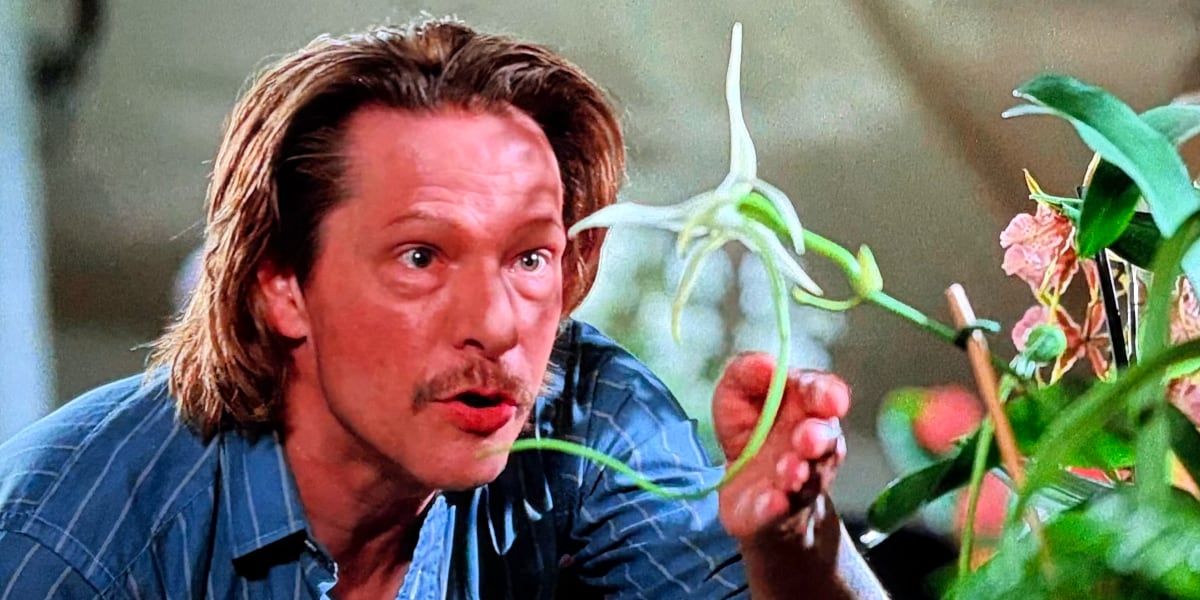
This is a classic Charlie Kaufman meta-story, with Nicolas Cage playing the screenwriter protagonist as an agonisingly self-loathing creature whose head is filled with a continuous stream of self-doubt and disgust. He struggles to connect with people, and can’t bring himself to share his feelings of love for friend Amelia. In a parallel story, Susan Orlean is writing about orchid specialist John Laroche, and she goes with him into the swamps of Florida to find a rare ghost orchid.
As things unfurl, we see that Charlie is actually writing the screenplay of the film we are watching, and that Susan Orlean and John Laroche are his versions of the people in the book he’s adapting. Susan is in a lonely marriage, creatively empty, disappointed with her life, and she becomes jealous of Laroche’s power to become fascinated with anything he decides to. Laroche gets her hooked on a drug he can create from the ghost orchid, leading to a thriller-like ending
As painful as it is to watch Charlie torture himself, it’s worth it for the eventual connection he establishes with Donald, his creative opposite. Donald is like Laroche, free-spirited and deluded, and Charlie is like Susan, lonely and lost. To create something original, you need to find balance between opposites – being true to ideas and thinking about the audience; crippling perfectionism and ridiculous bravado. The path is delicate. It’s a miracle anything good gets made. But the path is also robust. If you listen to your intuition and the characters inside yourself, you can’t really go wrong.
(The real-life Susan Orlean really did write The Orchid Thief, and this film is Charlie Kaufman’s adaptation of it, showing just how far you can take an adaptation.)
August 09 2026, 20:24
Little Eyes
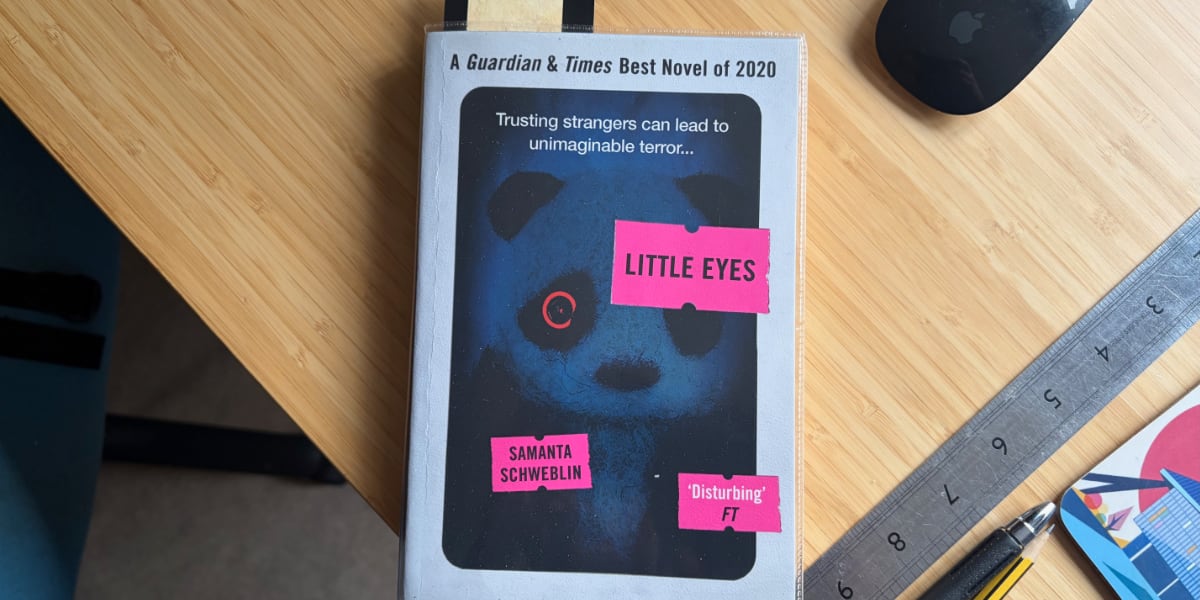
People all over the world are buying a new toy, a kentuki, that comes in different animal forms, as a companion. Kentuki can move around, communicate through animal noises, and understand what you say, because behind each kentuki is an anonymous person observing their stranger’s life through a camera in the toy’s eyes. Keepers own the kentuki, and dwellers control them – you choose which you want to be on purchase.
We follow several characters on both sides of the kentuki divide, with chapters labelled by location. Some of the characters are more important than others, and sometimes it was tricky to remember who was who as the point of view jumped around the world. When Schweblin was writing this (in the initial Spanish version), it was 2017, at the peak of social experimentation with Facebook, Twitter and YouTube. This novel explores those same desires to connect, see how others live, make money, survive, impress our friends, find a partner, be seen and be understood. It takes its time teasing out the moral ambiguities and problems implicit in the concept of anonymous voyeurism.
There’s a YouTube video where Schweblin speaks eloquently about the power of language to make us feel awe, discomfort, tension, and to let us face our worst fears safely. She also talks about how cinema influenced her work. It’s a fascinating interview. She talks about literature as a powerful technology that we continue to underestimate, instead focussing on phones and the internet. Losing ourselves in fiction, short stories, novels, puts us in situations that can make us wonder what we would do, how that would feel, and literature ultimately can influence our decisions in the real world and change our lives.
“Novels happen when a short story does not completely work.” That’s something interesting she said in the interview. She’s a prolific short story writer, but Little Eyes was nominated for Booker International Prize in 2020, and Fever Dream in 2017 (and made into Netflix film in 2021, directed by Claudia Llosa, which I now will watch!). The book and the interview have given me lots to chew on.
August 08 2026, 12:19
Freaky Tales
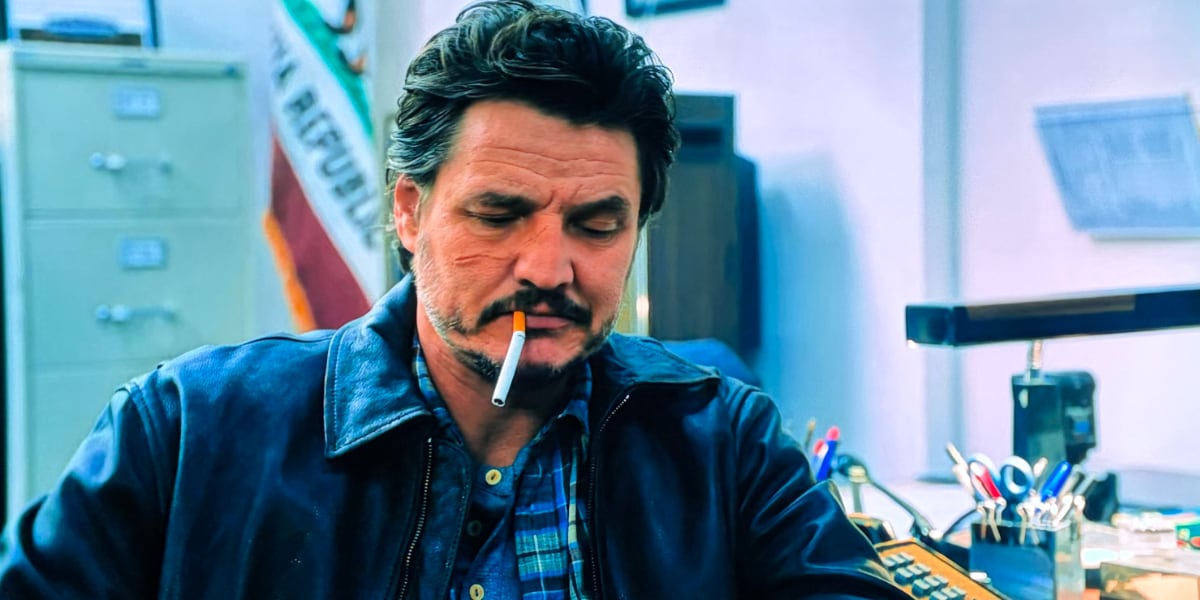
Four tales set in an admirably accurate 1987 Oakland, California, held together by a through line of a cheesy TV advert for a cult-like group offering a course in Psytopics. The writer/directors were coming off the back of the billion-dollar grossing Captain Marvel in 2019, and for this they netted some big stars for essentially a super-stylised, low budget Pulp Fiction homage with a hint of Repo Man. And they don’t seem to have anything new in the works. Weird.
Pedro Pascal and Tom Hanks bring their acting chops and give some of the slight stories weight. Ben Mendelsohn is impressively gross and unpleasant as the police inspector also running a gang of rampant nazis, who blast through all four tales in a whirl of racist, homophobic, violent energy. The theme of the film seems to be how to use the neon-green power of Psytopics to fight injustice and kill nazis. The violence manages to be both cartoonish and unpleasantly realistic. It’s fun in places, but has a slow first half and suffers from a lack of narrative oomph.
I do admire the idea of making something to celebrate a place you grew up in, and then bringing in people who lived there at the time to collaborate on it. The filmmakers’ love of Oakland, rap music, the cinema as a social activity, basketball, eighties fashion, and video stores, is on full display. It’s clearly made with love.
August 06 2026, 21:09
I, Madman
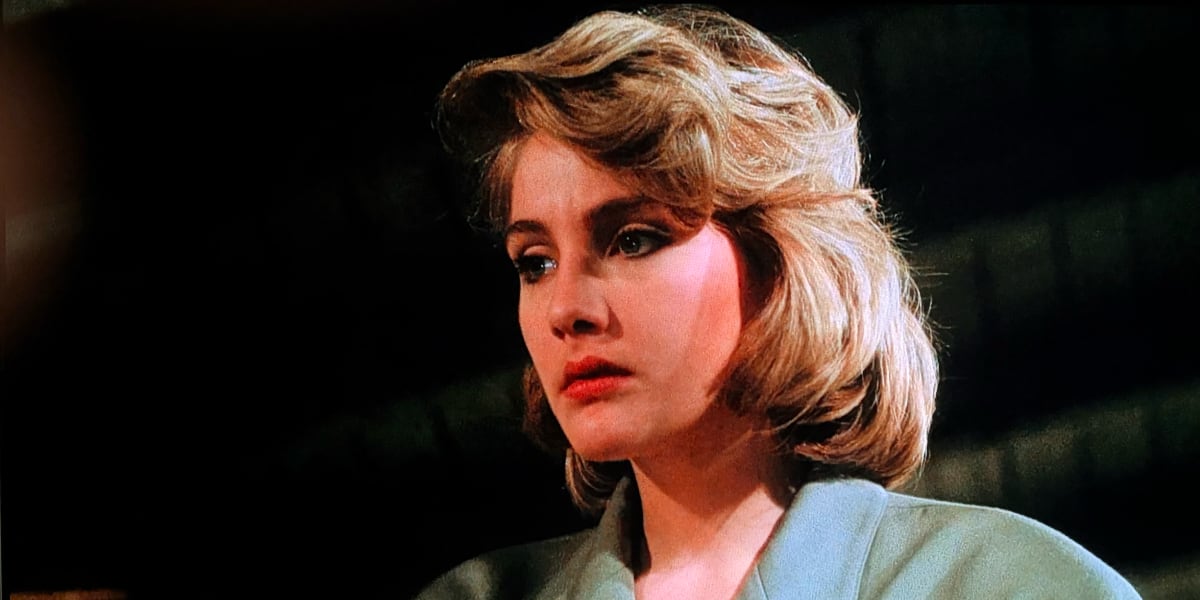
Book shop clerk and aspiring actress Virginia (Jenny Wright) loves pulpy noir horror and can’t put down a book by new discovery Malcolm Brand (Randall William Cook). The gruesome details and savage story line excite her, but they also keep her awake at night, and new boyfriend Richard (Clayton Rohner) thinks she shouldn’t read them. Brand’s final book, I, Madman, appears mysteriously at her door, and once she starts reading it, events from the book blend into the real world, and soon she is being terrorised by the dead Malcolm Brand.
I love that such an obscure film, with many actors appearing in little else, took such big swings with the story. Virginia is a bookish, nerdy heroine who wants to get lost in fantasy. A monster is shown in stop motion. It’s meta before meta was cool. This was the year of Halloween 5, Friday the 13th Part 8 and A Nightmare on Elm Street 5 – horror films were fizzling out as a cultural force. It’s a lovely surprise to find some creativity this late in the cycle.
I, Madman shares some DNA with the Elm Street films, mashed with Frankenstein and Jack the Ripper. Virginia’s new boyfriend, homicide detective Richard, is rooted in the physical world, and won’t believe her explanation of the killings that are happening around her. She tells Mona (Stephanie Hodge), her workmate at the book shop, that she isn’t sure if Richard is for her, perhaps because she senses his lack of inner life and imagination. The ghost of Brand is more real to her than Richard is, and in an early lovemaking scene, Virginia gets off on recounting to Richard the devilish deeds in the book, which he seems confused by. She wants more than her daily life can give her.
While Brand is clearly evil, there’s also something powerful and useful about him to Virginia. He kills an actress she’s jealous of, as well as a man she’s friends with who wants to become a lover – a rival to Richard. Brand is collecting body parts to recreate his great love and wears them: a red-haired scalp, ears, nose, lips, until by the end he’s impressively grotesque. Richard saves Virginia by arriving in the nick of time at the book shop, but it’s Virginia who figures out the spell that sends Brand back where he came from. It’s a pleasingly feminist film.
Jenny Wright was nominated for the Saturn Award for Best Actress in 1989, and I can see why. It’s a supple, interesting performance in a surreal low-budget horror film. She lost to Demi Moore in Ghost, and was also up against Nicole Kidman and Anjelica Huston. This film punches well above its weight. It did win one award, Best Film at the Avoriaz International Fantastic Film Festival in 1990. I can see why.
July 31 2026, 19:02
The Hotel
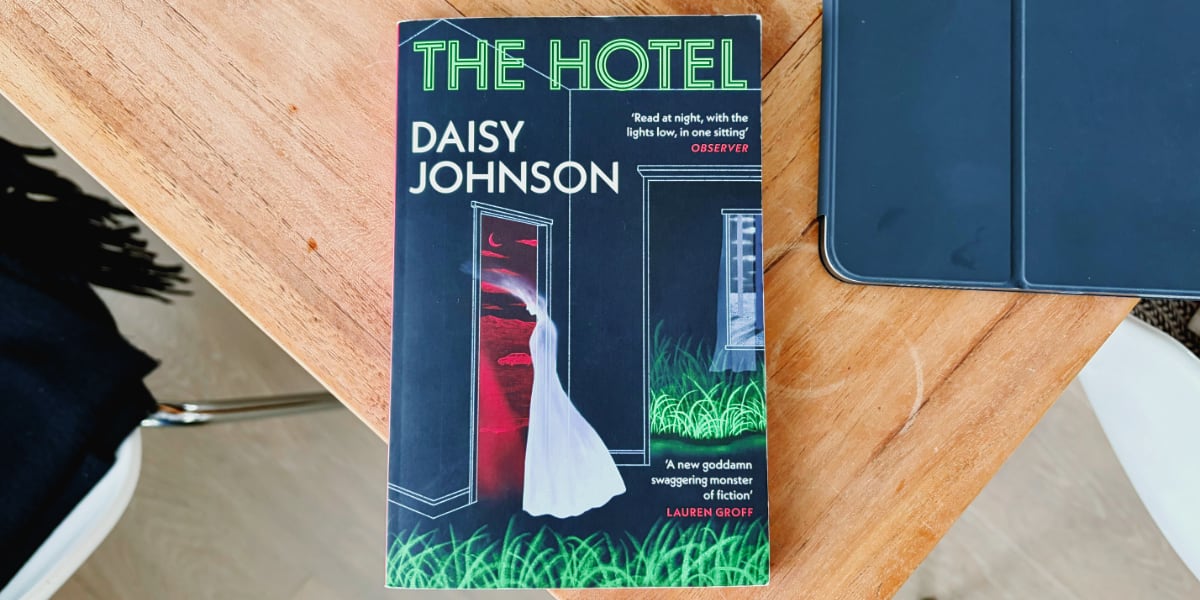
In the opening chapter, a narrator lays out everything that is known about a haunted hotel. From there, we hear voices speak of their experiences, from a woman labelled a witch and drowned in a pond, to a builder who hears voices at night, a little girl who makes friends with someone only she can see, and so on. The land the hotel is built on is cursed and the hotel itself takes on a life of its own.
It’s labelled a novel, but really this is a slim collection of short stories about a place. I liked the evocative details and variety of voices. About halfway through I stalled because there wasn’t any narrative drive. It’s a series of crisply written ghost stories. The voices are all female, drawn to the hotel for different reasons, and most come to a bad end.
My favourite chapter is from the perspective of the house-ghost itself, an ever-changing thing who calls the hotel Mother. It’s a lighter note in a mostly bleak experience. In the hotel, men are not to be trusted, but neither are the women. It’s a cold world and death isn’t the end of it.
May 30 2026, 18:18
Free play
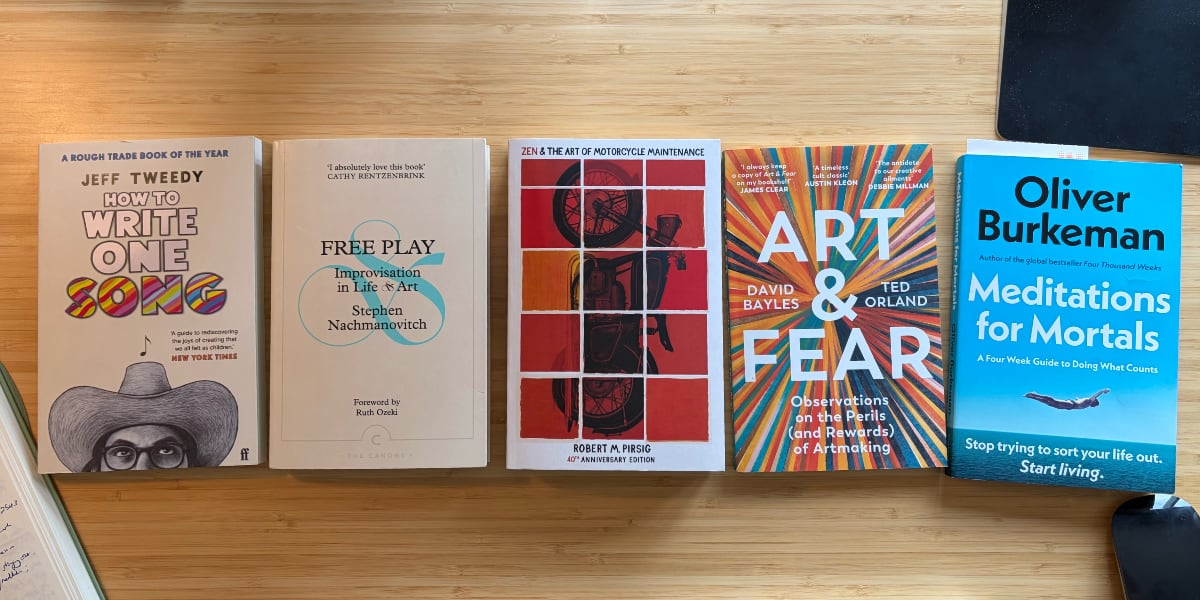
I’ve been reading a lot of books about the psychological aspects of making art:
- How to Write One Song, Jeff Tweedy
- Free Play, Stephen Nachmanovitch
- Zen and the Art of Motorcycle Maintenance, Robert M. Pirsig
- Art & Fear, David Bayles & Ted Orland
- Meditations for Mortals, Oliver Burkeman
There’s a tremendous amount of practical wisdom distilled into all these books.
This spurt of May research was triggered by a few things. In March, I split my one (true) notebook out into four—for creative writing, songwriting, art, and life in general. A parental voice in my head was telling me to “just fucking pick one or you won’t get anywhere”, but I know now that’s fighting my nature and simply doesn’t work.
With a new songwriting notebook, it became clear my guitar lessons weren’t taking me in the direction I wanted, so I decided to take a break. My writing brain wanted to write songs, even though I was still a beginner on guitar—guitar technique didn’t interest me, not yet anyway, and I’d learned enough to explore songs on my own for a bit.
I got into a good groove with the creative writing notebook. The art notebook remained empty. At the same time, I was watching YouTube channels on learning languages, learning multiple skills in parallel, software engineering, guitar, piano, singing, and yes, starting a YouTube channel. As a technician, I wanted to know how it worked behind the scenes.
This is a known pattern I fall into. Being thought-scattered without a project(s) to practice on feeds my discontent. It feels like procrastination, even though I’m not working on anything. The year wasn’t going how I wanted. Old patterns were returning. Whenever I’m looking to find some clarity and coherence, I turn to books.
Jeff Tweedy, in the intriguingly-named How to Write One Song, writes like a wise, kind friend, and his advice is backed up by musical success with the band Wilco. There are lots of specific techniques in the second half about writing songs, but my main takeaway is the importance of both treating songwriting lightly—to play like a child, for the fun of it, because it’s joyful to do—and being serious enough to do it often, with attention, care and craft.
In Free Play, Stephen Nachmanovitch, as a professional improvising violinist, has a wealth of wisdom to share on the improvisation part of making art. He brings a more spiritual, slightly philosophical perspective, but the book is still an easy read. He stresses the importance of listening to the unconscious while making. Pre-conscious material can be channelled through the body and fingers. Improvising is a practice of moment-by-moment micro-experiments where things are tried, they work as expected or don’t, and so on. There are no mistakes, just an endless conversation in whatever medium the artist is working in, continually spinning raw material into existence.
I went to Zen and the Art of Motorcycle Maintenance next because this was one of the books from my mid-twenties that got me into software engineering, and I sensed it might have something to say about my current problems with “art engineering”. It’s a philosophical enquiry into the experience of doing technical work, and through the concept of Quality, teases out the role of intuition in understanding and solving problems. Pirsig doesn’t talk about generating art, but instead states that doing work well is the bridge between technology and the arts.
I picked up Art & Fear because I wanted to be thorough, and it’s a slim book, another one from my soul-searching twenties. It lists the blocks, both internal and external, that an artist can experience, and offers advice on getting around them. Like Tweedy, it strongly advocates for art to be something ordinary, daily, normal, and not tied too tightly to identity and being successful. To create from inside yourself is to be vulnerable, and that’s the difference between making art and making crafts. Artists have to find a way to bare their souls while not taking the response of the world too seriously. That one hit home.
Finally, Meditations for Mortals, by Oliver Burkeman, cleansed my palate nicely, taking a down-to-earth look at what it’s like to live in today’s always-on, everything’s-available, anything’s-possible culture. It makes people unhappy, and he says that by facing up to our (often grim) reality we can relax and do what’s actually important to us.
Those were five books about being creative that look at different aspects of making things in a world that can feel overwhelming. I recommend them all (with a caveat on Zen and the Art of Motorcycle Maintenance, because it was least impactful to me now and took a lot of energy—and I skipped some of the history of philosophy sections this time!).
What did I learn? What was I made to remember?
- Finish small projects often, and learn while making things. Write songs on guitar when still crap at guitar.
- Forget external validation, be ambitious to make good stuff that could only come from you.
- Separate improvising from editing. Get material into the world, then work on it. Create systems that make this easy.
- The best raw material comes from listening to what’s bubbling up from the unconscious.
- Be joyful, playful, relaxed, and lose yourself in making things.
- Playing as kids was pure art-making, self-making. It was ordinary. It was a daily thing. Collaboration was easy. Knowing what you liked was easy. Losing yourself in doing something was easy. That’s the state to get into.
- Let the ideas and feelings flow, and express yourself in play.
May 24 2026, 21:43
Authority
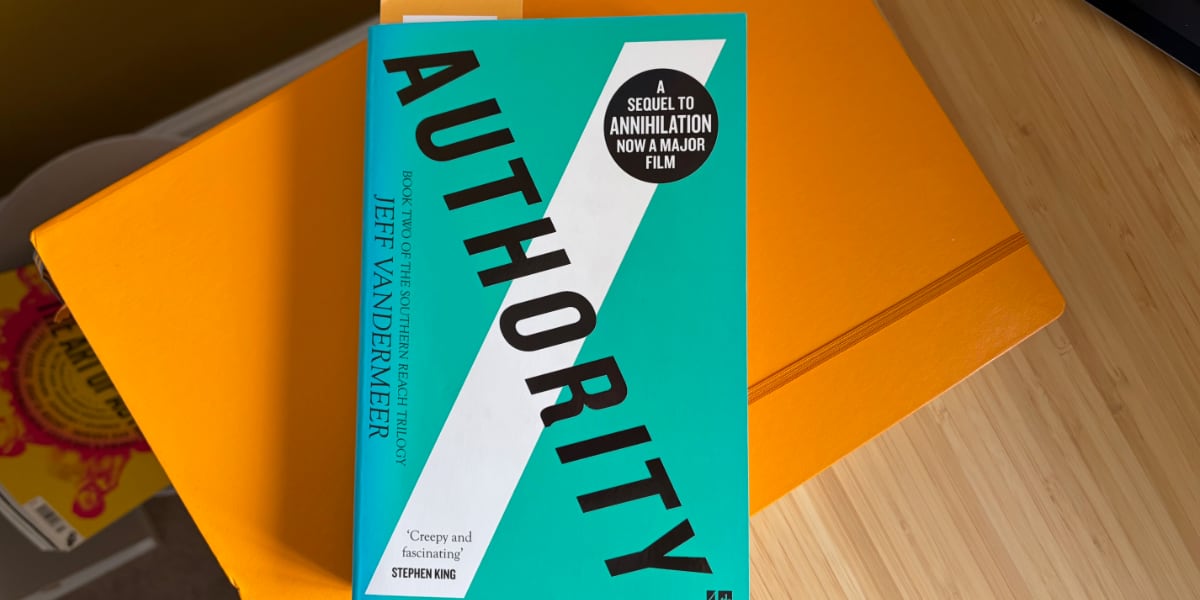
I read this in 2018 and thought I didn’t finish it. After the joys of Annihilation, I gave it another try, and what do you know, not only had I actually finished it last time, but instead of the dismissive frustration I remember, it was good. Really good. My brain tricked me. Memory cannot be relied on.
A new director of the Southern Reach, calling himself Control, arrives at the border of Area X tasked with investigating what happened to the twelfth expedition. The staff are wary, bordering on hostile, and the assistant director makes his life difficult from the outset. Control reports to a voice-camouflaged superior who directs him in his probing of the building and the previous director’s many decades of notes and reports. We also learn Control’s mother is a high-ranking leader in government who got him the role as a favour and a ‘last chance’.
I don’t know what my problem was in 2018, because I loved Authority in 2026, gulping it down over a few days. It must be something to do with my changing taste. All of the set pieces I remembered, that I was convinced were in the first half of the story, were spread evenly and effectively over the whole. Perhaps the final fifty pages could have been twenty, but hell, that’s nitpicking.
Where Annihilation was a report by the Biologist from inside Area X, Authority is more like an uncanny spy novel, with corporate intrigue, interrogations and weird science. It isn’t as pure perhaps—there’s a unique hit that comes with a reader’s first experience of the world of Area X—but it is fascinating in a satisfyingly different way. I'm going to wait a while before trying the last book in the trilogy (although it's hard to read Anita Brookner again after this).
May 09 2026, 13:28
She Who Remains
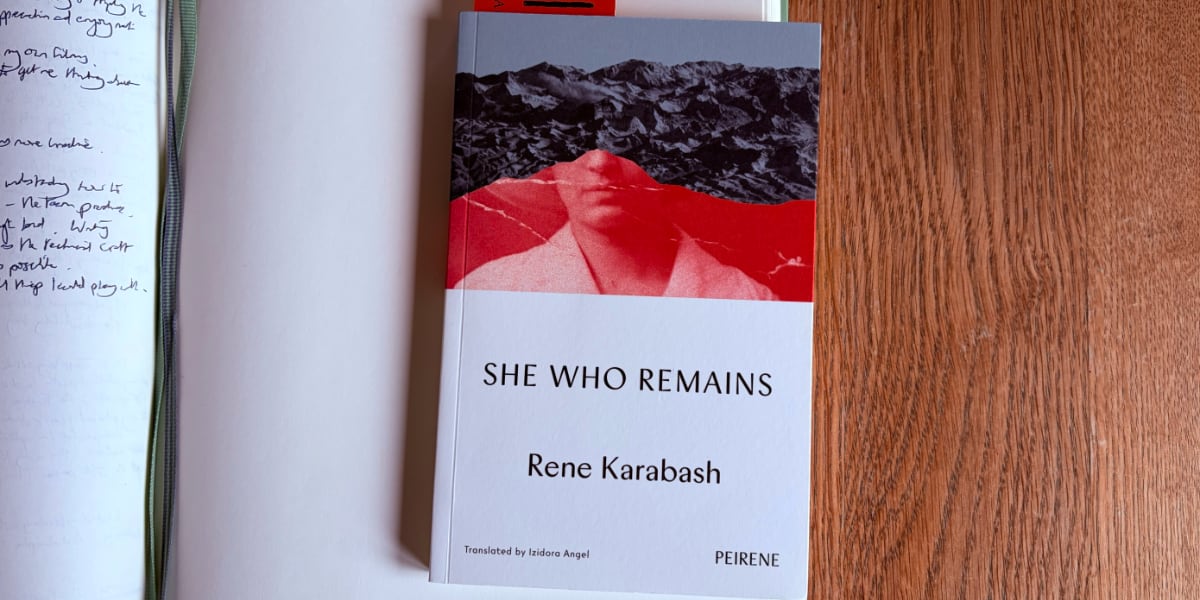
It starts confusingly with word definitions, quotes, and a rush of thoughts about the death of a father. Bekija is the daughter of Murash who has been shot in the head. They live in the “Accursed Mountains” somewhere in Albania with her unnamed mother and her brother, Sále. The villagers live under the Kanun of Lekë Dukagjini, a set of ancient Albanian laws passed down through families. Murash was killed because Bekija turned down the offer of arranged marriage to become a sworn virgin.
Men rule the villages, and women have little agency. The night before her unexpected wedding, Bekija loses her virginity, and she knows if that is discovered her father will be shot. To avoid this, she renounces her female identity and takes a vow of chastity so she can begin a life as a man. She changes her name to Matija. However, this unleashes a series of brutal decisions and actions under the archaic laws of the Kanun.
I read She Who Remains in one sitting. It’s short, 35,000 words or so, and the stream of consciousness style, short chapters and changing formats kept me reading. The story rushes along, told to a “Mrs Journalist”, possibly the author, with details of Albanian life dropped unexplained into the lyrical prose. The fact that Matija can’t read sets up the second half of the book, which has surprising twists and a satisfyingly emotional ending.
Translated by Izidora Angel.